

The cancellation of Israel-Argentina "has the potential to one day trigger a sports boycott"
American sociologist Tamir Sorek, a specialist in the links between sport and politics in Israel, believes that Argentina's decision not to play the game could have long-term consequences.

Why was the preparatory match for the Israel-Argentina World Cup scheduled for June 9 in Jerusalem canceled? For security reasons, as claimed by the Argentine Federation? Because of the pressure of the Boycott, Divestment and Sanctions (BDS) movement and the Palestinian Federation, described by the Minister of Sports, the ultranationalist Miri Regev as "old new terrorism"?
Neither, says American Tamir Sorek, professor of sociology at the University of Florida and specialist in the links between sport and politics in Israel. The "security reasons" invoked by the Argentines "are nothing more than a pretext. Other sporting events took place in Israel in much more complicated circumstances. The BDS campaign? "It has been important, but they have made efforts of this type in the past, without the same success. "
The difference, this time, is explained by the researcher by the Israeli political situation. "This cancellation clearly has a political context and it also reflects, in my opinion, the deterioration of Israel's international image," says Tamir Sorek.
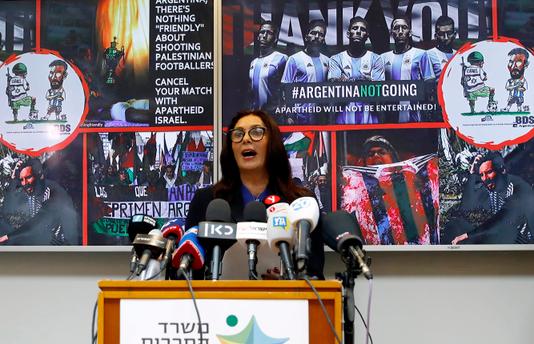
Until June 5, the match was to take place: the Palestinians could not find anything wrong, like the Argentines who had already cashed the check valuing their coming to Israel, they who had played in Jerusalem in the past. The fuel element is Miri Regev's decision to move the Haifa match to Jerusalem, less than a month after the inauguration of the US embassy in Jerusalem and the death of 61 Palestinians killed by Israeli bullets during protests in Jerusalem. Gaza.
The change of stadium for the friendly match, criticized by the political and media opponents of the Netanyahu government, must be understood in the context of celebrations of the 70 years of the creation of the State of Israel.
"Using sport for political gain is an old practice, including in Israel, but here we are at a much more intensive phase," says Tamir Sorek. As the current Israeli government shows no political concession to international public opinion, it needs new ways to achieve legitimacy, whether international or internal. One of them is to host world-class sporting events, such as the invitation of a world football icon or the organization, for the first time outside Europe, of a great cycling tour. .
Since then, the match has taken an extra-sporting turn, moreover completely assumed by the Israeli government. When Jibril Rajoub warned his Argentine counterparts that the match had become "a political instrument," Miri Regev replied in the Maariv newspaper: "Of course I want to see one of the best players in the world play in Jerusalem. Is there a better propaganda than that? "
The minister assured that it was the family of Lionel Messi who wanted the match to be moved to Jerusalem, his father, Jorge, wishing that the player will tour the holy places of the city before playing the World Cup. Russia. As did Diego Maradona before winning the one in 1986. The Messi family did not confirm this information.
Sport drives boycott of apartheid
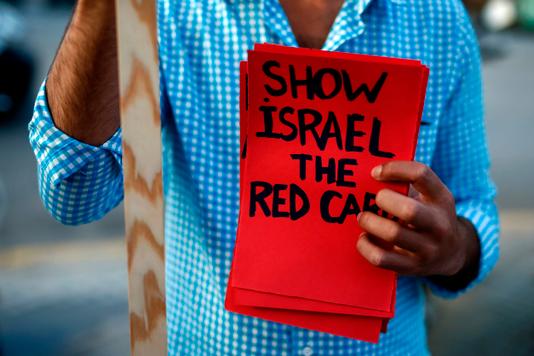
Although it is difficult for them to claim full paternity, the BDS activists welcome this cancellation with international repercussions. However, we can not, says Tamir Sorek, "talk about a sports boycott, simply because the Argentine Federation has not presented as well. But it is a symbolic decision that has the potential to one day trigger a sports boycott.
So far, Israel's sports boycott has mostly been the result of individual actions by Iranian or Arab sportsmen preferring to give up rather than facing an Israeli opponent. There are many cases in combat sports, especially since the late 2000s. It is also because of a boycott of a majority of Arab countries that in the collective sports, Israel is poured into the European sports confederation.
The Argentine cancellation, even if it is not openly political, could make jurisprudence for countries less directly involved in the Israeli-Palestinian conflict. This is in any case the dream of the BDS, whose model is the boycott of the apartheid regime in South Africa in the 1970s. It began, in 1956, by the suspension of South Africa of the International Table Tennis Federation, which preceded those in cricket, rugby, football and finally the International Olympic Committee.
In two decades, the sports boycott facilitated the cultural, academic and economic sanctions boycott. If we can make comparisons between the two situations, there are also many differences, says Tamir Sorek, including the position of the United States, which would prevent any general boycott or suspension by FIFA, hitherto reluctant to sanction Israel for organized games in the occupied territories.
The Argentine affair and its political repercussions have dominated the press and the debates in Israel for two days, and the Jewish state is already worried about another boycott possibility: that of the Eurovision contest, to be held in Israel in 2019 The same dynamics that preceded the friendly match that will not take place are emerging: petitions have been launched including some countries, such as Iceland. The Israeli government assures that it will take place in Jerusalem and not elsewhere.
